 Device
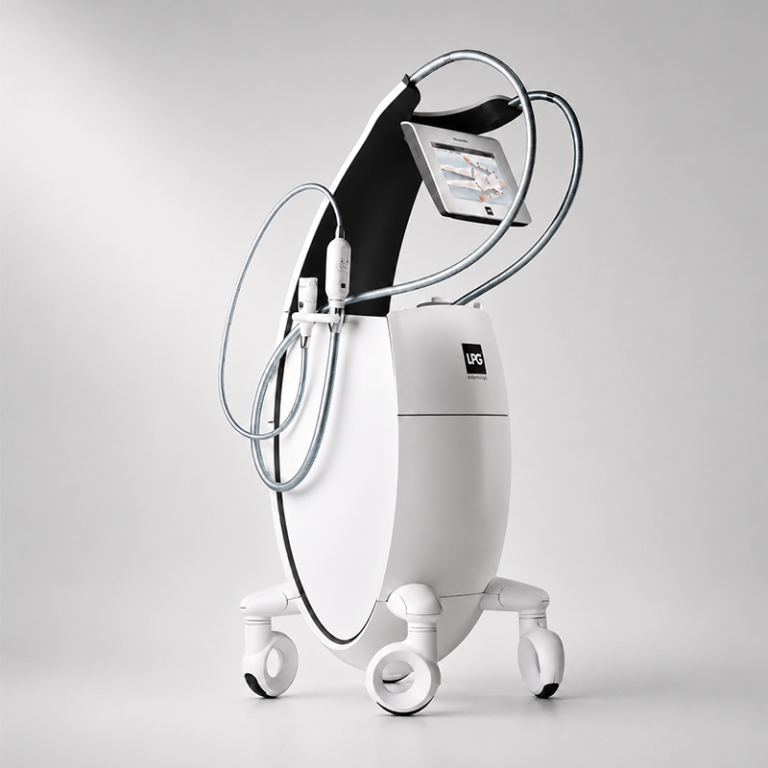
LPG Alliance
mechanical lymphatic drainage that decongests and relieves from the first sessions
Learn more →Fluid retention and heavy, swollen legs improve with LPG Alliance mechanical lymphatic drainage, which activates circulation and reduces swelling from the first sessions. Lipoedema, a symmetrical, painful build-up of fat on the legs that does not respond to dieting, needs a plastic surgeon's assessment and conservative care, which we offer at Essentia.
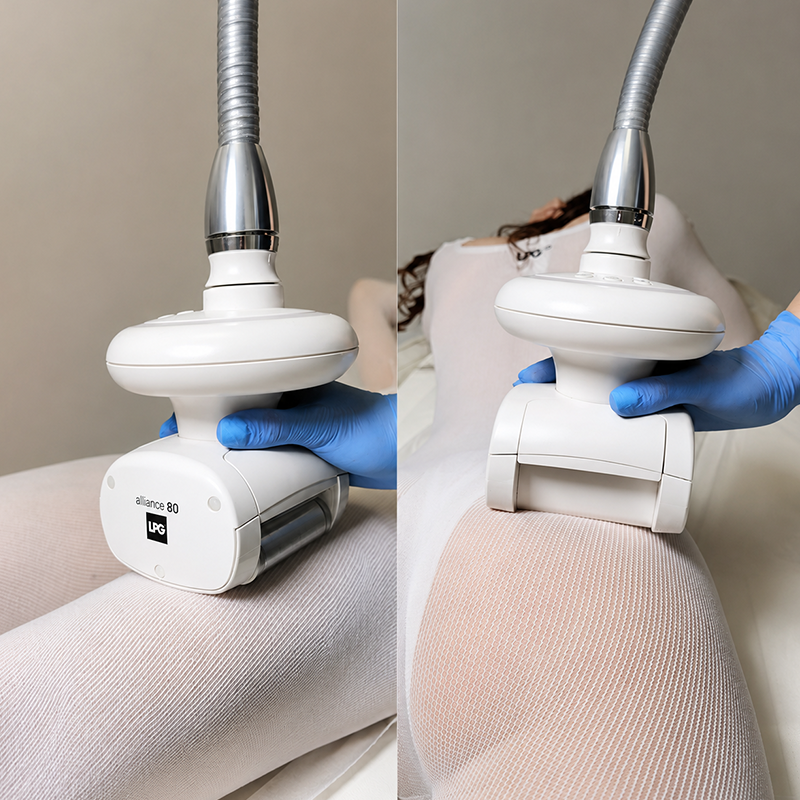
The lymphatic system removes the fluid that leaks from the vessels into the tissues. When it cannot keep up, because of hormones, standing or sitting for hours, heat, salt, travel, the fluid stays in the legs: heaviness, swelling in the evening, a sock mark. Mechanical lymphatic drainage with LPG 'pushes' the fluid towards the lymph nodes with rhythmic suction and activates circulation, which is why relief comes quickly [1]. Lipoedema is something else: a chronic condition of the fat tissue, almost exclusively in women, with symmetrical build-up from the hips to the ankles (the feet stay slim), pain on pressure, easy bruising and fat that does not go with dieting. It is often mistaken for cellulite or 'heavy legs' and stays undiagnosed for years. Dr Papaioannou specialises in lipoedema: diagnosis and surgical options (lipoedema liposuction) are at his practice; at Essentia we offer the conservative care, that is LPG lymphatic drainage, guidance on compression, movement and diet, and the care after surgery.
For fluid retention and heavy legs, LPG Alliance with a decongestion programme, twice a week at first, and carboxytherapy for circulation. For lipoedema, first Dr Papaioannou's assessment; then a conservative programme with LPG, compression and guidance, and, if surgery is done, the Beyond Surgery recovery programme.
Devicemechanical lymphatic drainage that decongests and relieves from the first sessions
Learn more →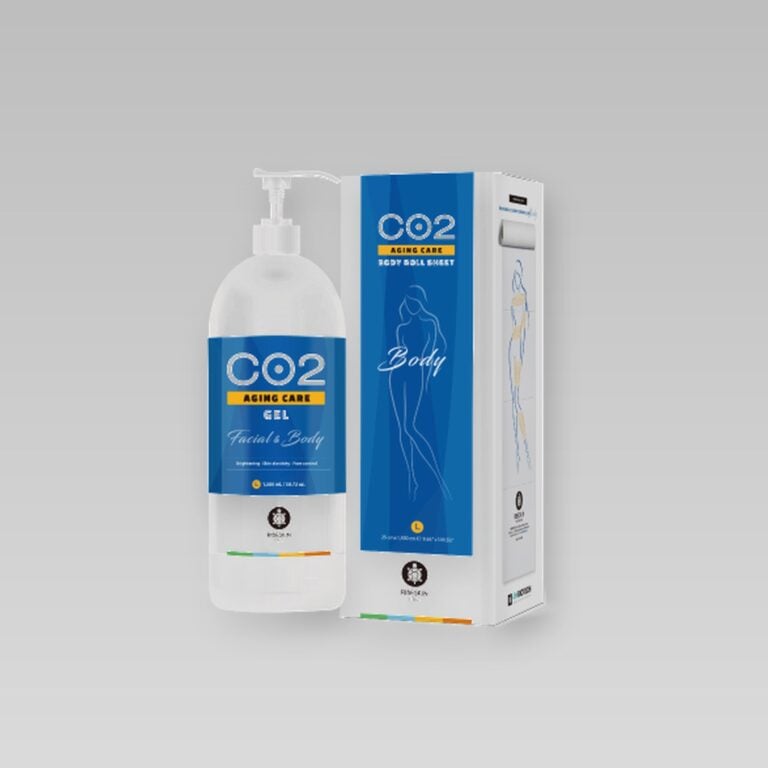 Device
Before and after: in fluid retention, relief and reduced swelling often show from the 1st–2nd LPG session and stabilise with the programme. In lipoedema LPG does not remove the fat, but reduces swelling, pain and the feeling of heaviness, and helps before and after lipoedema liposuction. The result lasts with maintenance, compression and movement.
Often from the 1st–2nd LPG session the legs feel lighter.
A doctor makes the distinction: lipoedema is symmetrical, painful on pressure, leaves the feet slim and does not change with dieting. Dr Papaioannou diagnoses it at his practice.
Conservative care (lymphatic drainage, compression, movement, diet) for the symptoms, and lipoedema liposuction to remove the abnormal fat, at the practice.
Dieting does not remove lipoedema fat, but an anti-inflammatory diet and a stable weight reduce swelling and pain.
Yes: with the surgeon's approval, it reduces swelling and helps the skin adapt. See Beyond Surgery.
It depends on the treatments, areas and number of sessions. Add what interests you to your plan and the proposal with prices comes to you on WhatsApp, with no obligation.
Medically reviewed by Dr Prodromos Papaioannou, plastic surgeon, HESPRAS member · 20 October 2026