 Combo
Soprano Ice
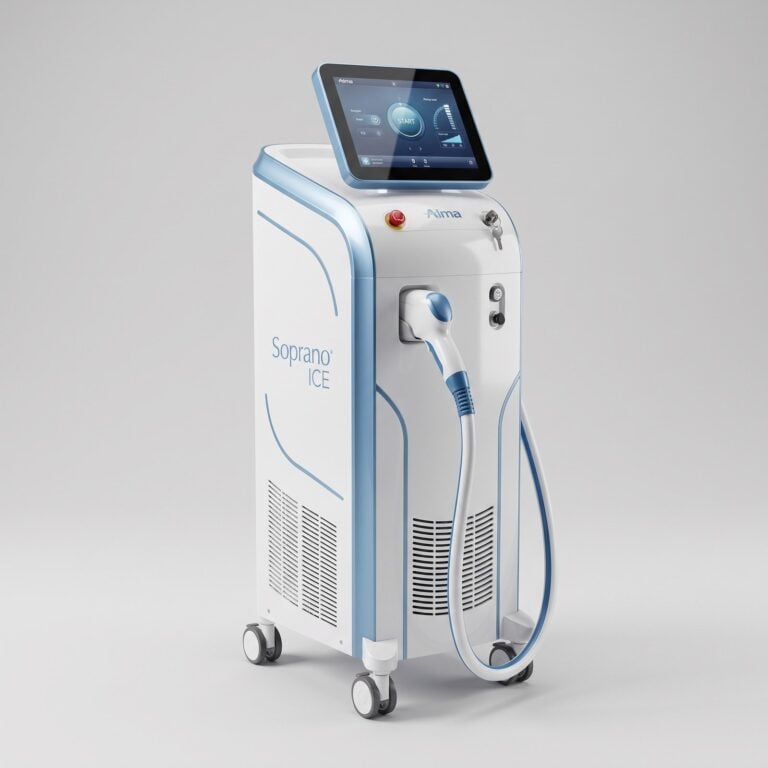
Soprano Ice by Alma is a hair-removal laser with an ICE cooling tip that selectively destroys the hair follicle almost painlessly, for permanent hair reduction. It combines SHR technology (gradual heating) with a 755 nm wavelength, can be done all year round, in summer with care, for women and men.
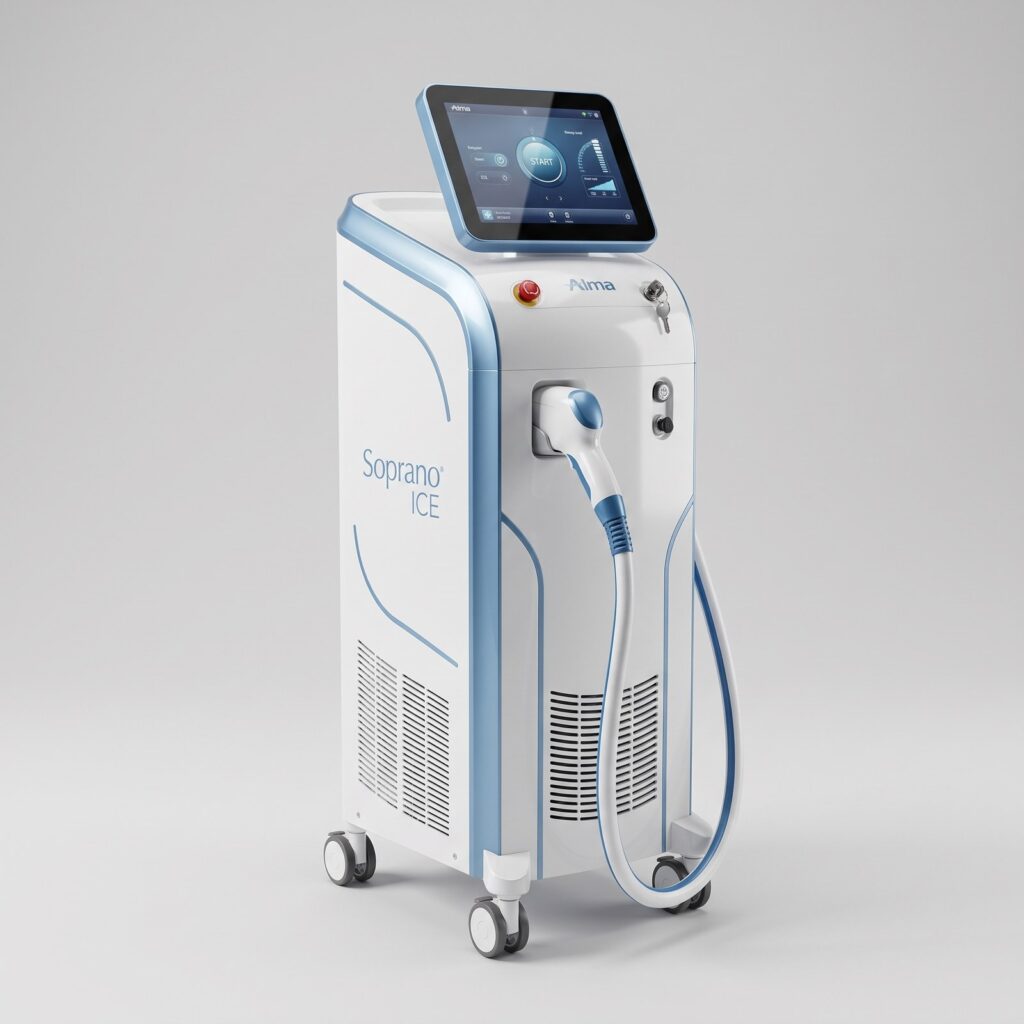
Hair-removal lasers target the melanin in the hair: the energy is absorbed by the dark hair, carried to the follicle and destroys it, while the surrounding skin is left intact [1]. Soprano Ice does this with the SHR method: instead of single powerful pulses, the tip moves continuously over the skin and heats it gradually, so the follicle reaches the destruction temperature without the sting of classic lasers [2]. The ICE tip cools the skin at the same time, protecting it from burns; that is why Soprano Ice can be used on darker or tanned skin, with the right settings. The laser acts only on hairs in the growth phase, which is why 6–8 sessions are needed to 'catch' all the follicles [1]. We chose it because it is one of the most painless and safest hair-removal technologies, for all skin types, all year round.
Soprano Ice suits women and men who want to be done with shaving, waxing and ingrown hairs. It works best on dark hair; blonde, red and white hairs do not have enough melanin and do not respond. It can be used on all skin types, including tanned skin, with adjusted settings. It is allowed during breastfeeding and hormone therapy; in pregnancy we postpone. With hormonal excess hair the result holds, but maintenance is needed more often.
Aloe or calendula to cool the skin. Daily sunscreen and no strong sun on the area for 7–10 days; in summer we carry on as usual, with sunscreen and without heavy exposure of the area. No hot showers, sauna or intense exercise for the first days. The hairs 'grow out' and shed on their own in about 2 weeks; between sessions, shaving only.
Before and after: for the first days the hairs seem to 'grow', in fact they are being pushed out of the follicle, and they shed on their own in about 2 weeks. After each session the hair is sparser and finer; from the 3rd–4th session the difference is clear and after 6–8 only a few fine hairs remain, kept in check with 1–2 maintenance sessions a year. Blonde and white hairs do not change. Shave 1–2 days before, sunscreen after.
The usual reactions are redness and slight swelling around the follicles for a few hours. Rarely there is passing hyper- or hypopigmentation, mainly after sun exposure, or paradoxical growth of fine hairs in a neighbouring area [1]. Burns are very rare with ICE cooling and correct settings. If you see a blister or feel marked pain, call us the same day.
The cost depends on the areas (small, medium, large) and on whether you choose a programme of sessions or single sessions. Add Soprano Ice to your plan and the personalised proposal, with prices, comes to you on WhatsApp.
ComboAlmost not at all. The ICE cooling tip protects the skin and the gradual SHR heating avoids the 'snap' of classic lasers.
Usually 6–8, every 4–6 weeks, depending on hair colour and density and your skin type. Then maintenance 1–2 times a year.
Yes, and on tanned skin, with the right settings. You need sunscreen and no heavy sun exposure of the area in the days around the session.
No. The laser targets melanin, so blonde, red and white hairs do not respond.
Yes. The laser acts a few millimetres into the skin and does not affect ovaries or lymph nodes. It is allowed during breastfeeding and hormone therapy; in pregnancy we postpone.
Yes. Back, chest, neck and beard line are the most common areas.
Yes: hair removal works as a programme of 6–8 sessions, so the proposal you receive is a package per area or full body. Add the areas to your plan and you will see it on WhatsApp.
Soprano Ice combines the alexandrite wavelength (755 nm) with gradual SHR heating and ICE cooling; so it has the effectiveness of alexandrite on fair skin without its pain, and also works on dark or tanned skin.
It depends on the areas. Add Soprano Ice to your plan and the proposal with prices comes to you on WhatsApp, with no obligation.
Medically reviewed by Dr Prodromos Papaioannou, plastic surgeon, HESPRAS member · 20 October 2026
DeviceSoprano Ice by Alma is a hair-removal laser with an ICE cooling tip that selectively destroys the hair follicle almost painlessly, for permanent hair reduction. It…
Learn more →